“There is always hope”: trauma care in the Horn of Africa
What is trauma care? And how does it help persecuted Christians? These are some of the questions you might have when it comes to how Open Doors supports those experiencing the long-term impact of persecution. Netsebraq* is a Christian working in the Horn of Africa as a trauma caregiver – here, she shares about her work.
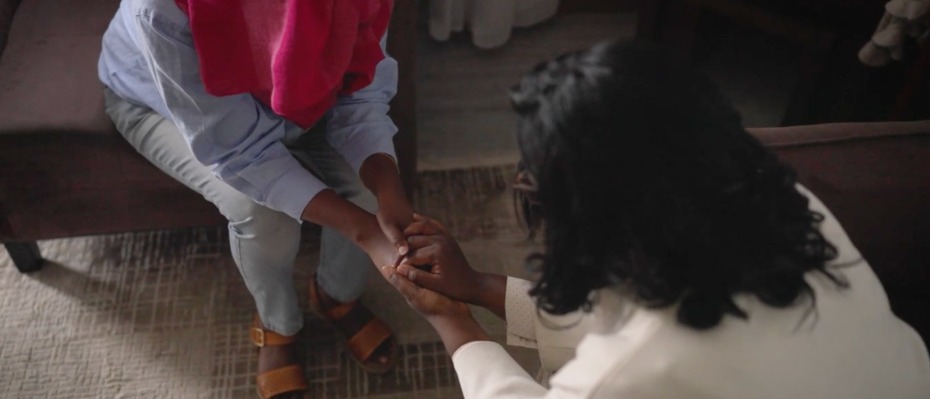
Around the world, many Christians suffer deeply for following Jesus. Inevitably, these experiences bring with them wounds and scars that endure for a long time after the initial act of violence. That’s why Open Doors provides trauma care – a vital support in addressing the long shadow of persecution.
The price of faith
Netsebraq* is a trauma caregiver ministering in the Horn of Africa, a part of the world where followers of Jesus can face fierce opposition for their faith. Pressure to reconvert on those who have left Islam, for example, can easily morph into violence and assault, forcing many believers to flee their homes or face more attacks. Women are particularly vulnerable to the effects of this persecution.
Netsebraq’s experience of persecution goes back to her youth.
“I grew up in a Christian family. We were involved with persecuted believers, and they would come to our house and stay sometimes for a short time, sometimes for years. So, I think persecuted believers were near to my heart since childhood,” she explains. “My dream work was psychology. So, when I got the opportunity, I studied psychology and always wanted to work in Christian organisations where I would be able to support people with a background of persecution.”
“It’s a chain of incidents.”
Netsebraq
For Netsebraq, the need for trauma care was never in question. “Why we need a lot of trauma counselling in the Horn of Africa is because, first, we are vulnerable to so many traumatic incidents in the region. Sometimes, Christians will lose their family, their children. It’s not one incident that’s going to happen to them; actually, it’s a chain of incidents.”
Despite the ordeal that believers go through, not all Christian communities know how to respond: “The church is not aware of such kinds of things,” Netsebraq explains. “For example, say if somebody goes through trauma, they might say, ‘You are having such symptoms because you are sinful, because you are not strong spiritually, because you have some issue that you didn’t deal with or you have a curse in your family.’ Because trauma is not that much known to the community, the people don’t know how to treat it when it has happened.”
New identities
“They face an identity crisis. They used to belong to a family, a community.”
Netsebraq
Persecution is not limited to the physical injuries some believers bear. “When the Christians [we treated] came to Christ, they faced very brutal isolation – total community isolation. They face an identity crisis. They used to belong to a family, a community. They find themselves alone, and they will always have this longing to belong to some kind of fellowship,” Netsebraq says.
Across the Horn of Africa, the general societal norm is that people live with their parents until they are married. Because of this, if a person is rejected by their parents and cast out of the home, the consequences are harsh – particularly for young female converts. “People will start to see you like not a decent person, especially if you are a woman. Sometimes you might face hurtful words from others,” she states.
Facing such a crisis rooted in one’s own home, how can followers of Jesus find strength? Netsebraq explains the process she and her colleagues undertake. “First, we want them to understand that their situation, and that what they are feeling is OK,” she begins. “Many times, you will find them blaming themselves for how they feel. We will lead them to understand what they are feeling is because of the situation that happened to them, not because they are bad people, not because they are sinful. And we will give them some awareness about things like how depression, anxiety and trauma feel.
“We emphasise the point that they are now part of the Kingdom of God.”
Netsebraq
“We help them to accept the rejection – that it is OK to be rejected because Christ also faced rejection. We emphasise the point that they are now part of the Kingdom of God. So that gives them a sense of purpose, a sense of identity. That kind of shift doesn’t happen swiftly, but it starts to give them a sense while they process this trauma.”
Courage to persevere
“The good thing is our programmes highly rely on the Bible,” she continues. “Whatever we take them through, we take them back to the Bible. For example, we will go to the Bible and look for Christian people or big figures in the Bible who face trauma. How do they respond? We let them see.”
“There is always hope to move forward.”
Netsebraq
She emphasises the core of caring for those who carry trauma. “We show them that, through all these things, God is with them. Whatever desperate situation they are in, God is always in that desperate situation and there is always hope to move forward. There is always hope. And that really gives them courage; not only for them, even for us.
The impact of your prayers
For all the work they do, Netsebraq sees that it is futile without the power of God working through your prayers. She asks for your intercession for the work of trauma care: “When we started the healing centre, we called it, ‘House of Healing’. It’s not because we are marvellous in our profession; rather, we trust God. I personally say to God, ‘As long as You are here, needing me and as long as I see You are working, I will stay.’ As long as this centre is here, we want people to pray that we feel the hand of God working in this house.
“We also want to have our own place to work in a bigger way. Pray for our fruitfulness in our individual lives as well,” she says. “Stand with us while we are working with these persecuted believers and strengthening the church. Pray with us so that believers will know that they have brothers and sisters out there as well.”
*Name changed for security reasons
- Praise God for Netsebraq’s devotion to God and to the traumatised Christians she serves. Thank God for His faithfulness over the eight years of her ministry in helping her work to be fruitful
- That the Lord would uplift and bless Christians across the Horn of Africa enduring persecution for His name
- For these believers to find steady fellowship and know ‘the peace of God, which transcends understanding’. (Philippians 4:7)
- Every £18 could give Bibles to two women from a country where God’s Word is not easy to access.
- Every £28 could provide vital food aid and medicine to a woman and her family who have fled extreme persecution.
- Every £52 could help give persecution survival training to a vulnerable woman.