Syria | 09 October 2026
24 April 2026
Faith, fear and strengthening what remains
Elias and his family were at a service in Damascus, Syria, when a church bomber burst in. At least 22 Christians were killed during the attack, including seven members of Elias’s family. Will you help strengthen what remains?
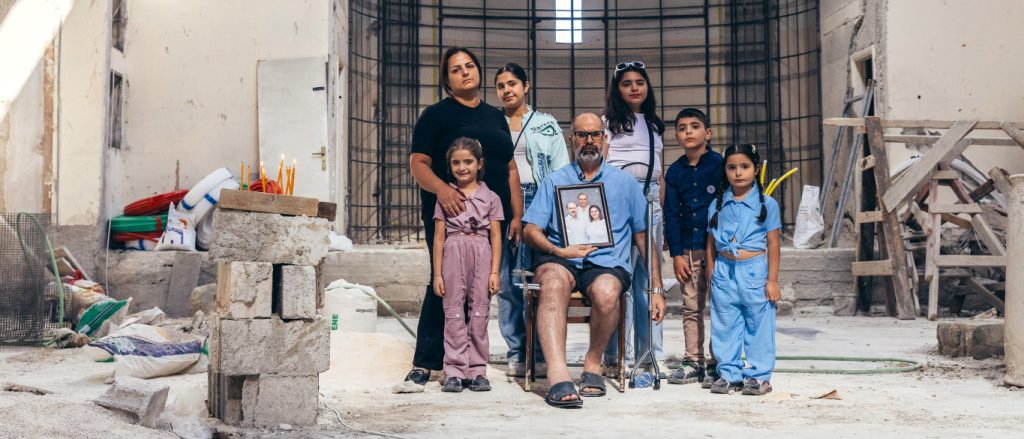
Sunday 22 June 2025 started out as an ordinary day in Mar Elias Church, Damascus. The only difference was the number of people in the church. More than 300 people were gathered for the one-week memorial for a much-loved member of the congregation, including her nephew, Elias, and his wife, Hanan. With so many people present, it was the most devastating day imaginable for a suicide bomber to burst into the service.
Gunfire and chaos
“People were shouting. The church had turned red.”
Elias
First, the church members heard gunfire. “The gunshots grew more intense from the front door,” says Elias. “The door was thrown open, and we were assaulted by a terrorist shooting right and left. People were shouting. The church had turned red.”
Everyone desperately tried to take cover. There was noise and panic everywhere. Hanan crouched between two seats, and Elias heard his brother, Geryes, shouting for people to “Get down.”
Geryes rushed to the bomber, along with his other brother, Boutros, and another man called Milad. Together, they tackled the bomber to the ground. After a short fight, the bomber detonated his backpack. The blast killed all four men instantly.
“Everybody witnessed their courage and martyrdom,” says Elias. “If they hadn’t acted, there would have been more casualties.” The bomber’s backpack had been filled with screws, meant to maximise the number of people killed in the explosion. In less than a minute, at least 22 Christians died in the attack – but the number could have been far higher if Geryes, Boutros and Milad hadn’t acted so quickly and so selflessly. Three further bodies, including the attacker’s, have never been identified.
“Please, just one more child”
In the aftermath of the attack, Hanan had only thing on her mind: her children. All five – Elen, Sarah, Taqla, Ibrahim and Christina – had been at the service. She started frantically searching for them among the chaos.
“Lord, please, let me find one more child. I’ll be content to find just one more.”
Hanan
“The whole church was destroyed,” she remembers. “I failed to see any of my children. I didn’t know where to search.” First, she found five-year-old Taqla. After that, she prayed the most desperate prayer of her life: “Lord, please, let me find one more child. I’ll be content to find just one more.”
At that point, Ibrahim came running toward her. “I held him and told him, ‘We have to exit quickly.’” The scene is still vivid in her mind: “As we headed to the door, we walked by bodies on the ground.”
Outside, a girl covered in blood kept following her. Hanan didn’t know why – until she looked down, and recognised the shoes. It was her 12-year-old daughter, Sarah. “I didn’t recognise her face,” says Hanan, the pain of the memory evident in her voice. “Her face was swollen and her hair was burned. She wasn’t able to see anything and was just following my voice.”
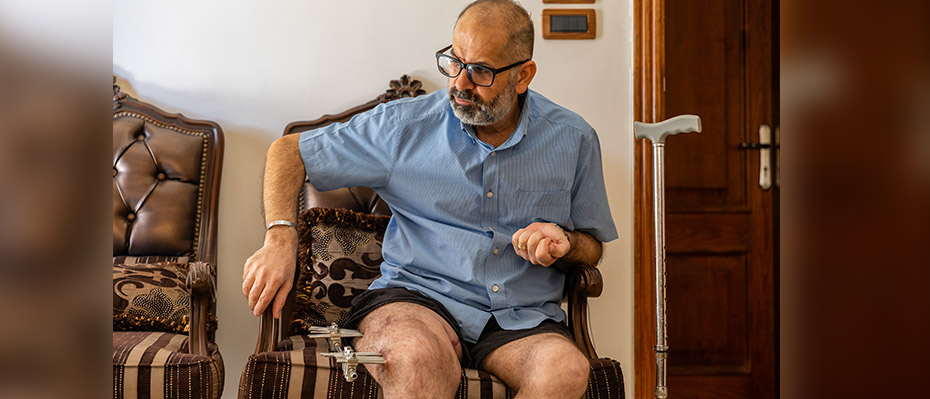
Miraculously, all five of Hanan and Elias’s children survived the attack. Elias was hit by two shards in his thigh, one in the femoral artery. He and Sarah were rushed to hospital – it was only in the days after the attack that he was strong enough to be told that his brothers, sister and four other relatives had been killed. “I broke down,” he remembers. “My brothers were like fathers to my children. They would spend more time with our children than we did. After we came home, there was emptiness.”
“The children still fear the smallest sounds.”
Hanan
Elias’s and Sarah’s injuries still affect them today, and beyond the physical wounds is the trauma that all the survivors are still healing from – particularly the youngest among them. “The children still fear the smallest sounds,” says Hanan. “If they hear fireworks, they think they’re being attacked.”
Escalating violence
The attack on Mar Elias is particularly harrowing, but it isn’t an isolated incident. In Syria, and across the Middle East, Christians have endured many years of persecution and oppression. The legacy of extremist Islamist ideology still persists, and Christians are often targets of religiously-motivated violence and opposition. Even when a crisis isn’t related to faith, such as the earthquake in 2023, believers can face discrimination in the distribution of support and often see their existing vulnerabilities compounded. Syrian believers like Elias and Hanan have endured years and years of ordeals.
Now, in the wake of the fall of Assad’s regime, Syria has risen sharply up the World Watch List. It is the sixth most dangerous place in the world to follow Jesus, jumping 12 places in a year. While it still isn’t clear exactly what the new regime will mean for religious freedom in the long-term, the authorities’ early promises of protecting all citizens’ rights have apparently come to little. Islamist extremists are exploiting the current political disorder to target Christians and other vulnerable minorities – largely with impunity. They frequently patrol Christian neighbourhoods, demanding believers convert or face terrible consequences.
Tens of thousands of Christians have left Syria and neighbouring countries over the past decade or so, looking for safety in other countries. Some faithfully remain, keen to preserve the church in a land which has had a Christian presence since the birth of the early church. But it is a terribly difficult choice.
“For the sake of our children, we are considering not remaining here,” says Elias. “If it’s God’s will, we will stay. If not, His will be done.”
Faith over fear
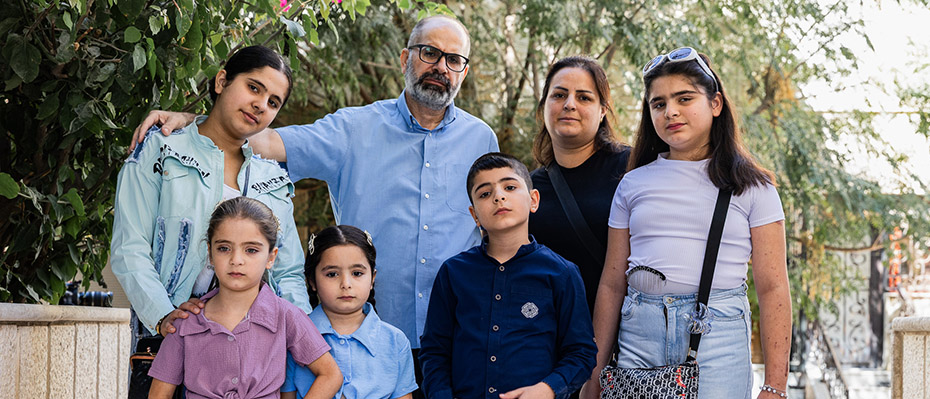
For now, the family wants to stay. More than that, they are determined to keep worshipping at the site of the tragedy – because it is still their cherished church, gradually being restored. Many believers are understandably too afraid to come back to Mar Elias but, despite the cost to themselves, Elias and Hanan won’t be deterred.
“We go to church, but fear still exists.”
Hanan
“We go to church, but fear still exists,” shares Hanan. “Yet even if we are afraid, we will still go.”
Elias agrees. Walking through Mar Elias Church, he picks up a picture of Jesus as the Good Shepherd. It’s still marked with dried blood. He reads the text on it: “I am the Good Shepherd, and the Good Shepherd lays down His life for His sheep.’” It’s a truth that means all the more to him now.
“We have no ambition but to remain faithful.”
Elias
Then he pulls out a stack of handwritten Bible verses. In the months after the attack, Elias sought hope and strength from Scripture more than ever before. “Studying the Bible made my faith deeper,” he says. “We live day by day. We have no ambition but to remain faithful.”
Looking around the church, Elias puts it simply. “We experienced faith and fear here,” he says. “We can’t deny it.” But despite all the family has faced, it is their faith that remains stronger. “I knew the Lord wouldn’t forsake us,” Elias says with conviction. “We thank Him for everything. We are grounded in our faith. We will go on. Jesus said, ‘On this rock, I will build my church.’ Our faith is built on rocks, not bubbles of soap.”
Strengthen what remains
When Brother Andrew founded Open Doors, he was inspired by the words of Revelation 3:2 – “Strengthen what remains.” It led him to seek and support faithful, vulnerable Christian communities in Communist Eastern Europe who felt they had been forgotten by the wider world. Today, believers in the Middle East need to know they, too, aren’t forgotten.
Local Open Doors partners are providing vital economic aid, Bibles and prayer support to our brothers and sisters. They are also supporting the persecuted church through crucial trauma counselling, and through counselling schools that train believers to support others. More than 60 graduates are now equipped as trauma counsellors, strengthening the church as they bring professional support to traumatised people like Elias, Hanan and their children.
“We offer Christians different psychosocial, spiritual and counselling support to overcome the impact of trauma and other crises they have faced,” explains Raneen*, a psychologist who partners with Open Doors’ local team to run trauma counselling sessions for adults and children. “We pray with them and give faith-based counselling to address the deep wounds caused by trauma.”
“Even in the darkest moments, God can bring healing and growth.”
Hanan
She continues: “Our primary goal is to bring emotional, mental and spiritual wholeness through the transformative power of Jesus Christ, with the belief that true healing is found in Him. The therapists here help people connect with God’s promises of hope, strength and renewal. Even in the darkest moments, God can bring healing and growth.”
This support is just the start. Across the Middle East, in the face of persecution, our church family need your support so they can heal from their trauma, be equipped for future risks and keep growing and flourishing. This is not a dying church – this is the body of Christ standing firm and faithful in the face of fear. Today, will you help strengthen what remains?
Please pray
- Hanan asks: “Never forget these innocent children who did nothing wrong. Keep praying for us, so that we really live in peace. Pray for us to feel safe, to see our children growing up, and to be happy here. We need to live a beautiful life, not a life of fear.”
- Elias asks: “We ask you to pray that we can resist every enemy, seen or unseen, and every thought that keeps us from glorifying God. Ask God to chase away this cloud of darkness.”
Please give
- Every £19 could help prepare a believer with persecution survival training, so they can persevere through any opposition.
- Every £30 could help give vital trauma care to a Christian who has faced extreme persecution, so they can receive hope and healing.
- Every £40 could give a Christian and their family vital support in time of crisis or extreme persecution.