Nigeria | 20 October 2026
23 June 2026
“We cannot deny victims a voice,” says UN official after Nigeria visit
The UN Special Rapporteur’s recent visit to Nigeria is further bringing to light the injustices and insecurities vulnerable communities, especially Christians, suffer in Nigeria. Join us in praying that this growing awareness will be met with urgent and decisive action by the Nigerian government and global bodies.
In another encouraging development, the UN Special Rapporteur, Nazila Ghanea, has released her preliminary observations and recommendations on the violence against Christian women and girls in Nigeria, building on the letter sent recently by UN experts to the Nigerian government.
The report follows her official visit to Nigeria from 8-19 June, which involved meetings with members of civil societies, federal officials and representatives of various religious communities, as well as with lawyers and academics. The focus was on ‘exploring how freedom of thought, conscience and religion (Freedom of Religion or Belief) interacts with human rights realities on the ground throughout this vast land’.
What does the report say?
The Special Rapporteur highlights acute concerns among those she engaged with – especially the spread of insecurity, violence and conflict throughout the country. “These include terrorist actions, gang violence and banditry incursions, land grabbing to mass displacement, armed conflict and cattle rustling, hostage taking to arson attacks, destruction of holy places and schools, large scale kidnappings in remote areas and civil unrest around protests and strikes, decimation of irrigated farmlands and whole villages and livelihoods, through endless cycles of threats, fear and death in expanding areas of the country,” she stated.
“Impunity and lack of accountability have reportedly entrenched these cycles of fear and violence and encouraged its spread. Previously these cycles were focused in particular regions, for example in the north west and north central. They have now spread across many parts of Nigeria, but largely outside urban areas. Federal authorities report a noteworthy stepping up of ongoing court cases in seeking to address this.”
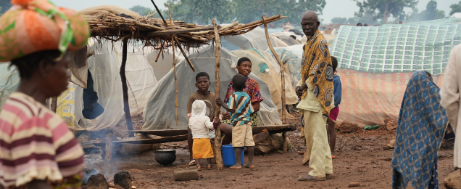
“Scores of innocent people experience the total decimation of their livelihoods, time and again, witnessing little or no justice.”
Nazila Ghanea
She continues, “What remains uncontested is that, at the village and hamlet levels in particular concentrations of the country, scores of innocent people experience killings, mass violence and the total decimation of their livelihoods, time and again, witnessing little or no justice.
“Attacks on schools and taking hostage of children also occur repeatedly across many states. It is rare for such attacks to be prevented though there have been welcome instances of this.”
A recent incident took place on 15 May, when almost 100 children were abducted from schools in two separate states. Their parents continue to await news of their young ones.
“The experiences of the acute insecurity situation – albeit of different intensities and forms – also map onto the religious make-up of particular communities impacted by the violence,” Ghanea states. “Each incident, episode and pattern of violence may demonstrate multi-layered, multifactorial crises. However, alertness as to the increasingly polarised religious landscape, and growing fear and segregation, they also map onto religious difference.
“We cannot deny victims of grave violations a voice.”
Nazila Ghanea
“We cannot deny victims of grave violations a voice. A legal determination can ensue when Nigeria domesticates the International Criminal Court (ICC) Statute and allows international crimes to be tried in domestic courts. In the interim, and as a human rights mandate, I do not reframe the voices of persons on the ground giving expression to their own reality. As one interlocutor pleaded, ‘we need a humanity first perspective’.”
Join the call for justice
“We welcome the visit of the UNSR to Nigeria and her engagement with representatives of a variety of groups, including members of civil society and representatives of religious groups,” shares Jo Newhouse*, spokesperson for Open Doors work in sub-Saharan Africa. “We further welcome her attention to the issue of insecurity, impunity and the lived experience of people at grassroots level and the dangerous levels of polarisation taking place in light of those challenges.
“We join her in calling on the federal government and their partners to an immediate and concerted effort to offer the people of Nigeria, regardless their race or religion, protection against violence, and justice and restoration for who have been affected.”
You can join the nearly 170,00 people in the UK and Ireland who have added their voice to the Arise Africa petition, seeking protection, renewal and justice for those affected by extremist violence in Nigeria and across sub-Saharan Africa. With your signature, our brothers and sisters can know that they are not alone. Will you take this step today?
*Name changed for security reasons
Please pray
- In thanks for the attention the insecurity in northern Nigeria is receiving internationally
- That efforts on every level of government and society will be made to enable all Nigerians to live productive and peaceable lives
- That the Nigerian government will take the SR’s recommendations seriously to protect its citizens and ensure freedom of religion and belief in every part of the country.
arise africa petition
You can help bring about justice for all those affected by persecution in sub-Saharan Africa by signing the Arise Africa petition. We’re looking to get one million signatures worldwide – can you help us reach the target by adding your voice and getting others to join you?