Bangladesh | 28 July 2026
28 July 2026
Religious and political developments in Bangladesh risk further exposing Christians
As Bangladesh continues to emerge from the political turmoil that unfolded in July 2024, questions over what the future might look like for Christians and other religious minorities remain pressing, particularly given recent religious and political developments.
As attacks on Christians in Bangladesh continue, the growing prominence of religious slogans and changes to the country’s National Human Rights Commission risk exposing believers to even further dangers.
Flags on flyovers
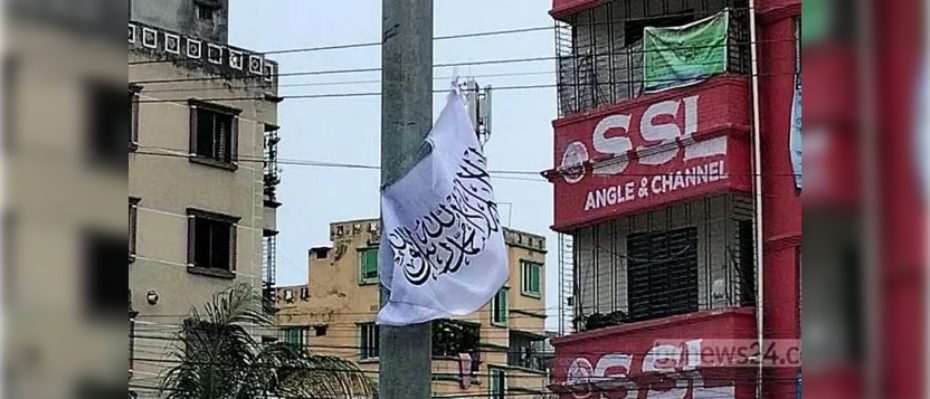
The growing visibility of Kalema Tayyiba flags – featuring Arabic script that translates, “There is no god but Allah, Muhammad is the messenger of Allah” – across Bangladesh on places like bridges, roads and flyovers has sparked public debate. It’s not because of the sacred Islamic declaration itself, but because of concerns over how it is being used and the message it may convey.
Since political upheaval in August 2024, religious influence in public life has become more visible, and some observers are concerned that organised groups may be using religious symbols to promote more hardline ideological agendas. The resemblance of some of these flags to imagery historically used by internationally recognised extremist groups has also attracted international attention and raised concerns about Bangladesh’s global image.
Whilst these developments do not mean that Bangladesh is becoming extremist, or that Islamisation inevitably leads to radicalisation, there is growing concern that some individuals or organised groups may be attempting to exploit this changing environment to advance more hardline religious or ideological agendas.
What message is being conveyed?
Although supporters argue that there should be no objection to displaying the Kalema flag, comparing it to Bangladeshis flying the flags of Argentina or Brazil during football tournaments, the comparison overlooks the wider political and security context. The concern is not the Kalema itself, but the message it may communicate.
Similar black flags with white Arabic script have been widely used by extremist groups such as al-Qaeda, so-called Islamic State (IS) and Boko Haram. Consequently, even when displayed with sincere religious intentions, such imagery can be interpreted internationally as carrying extremist associations.
The issue has gained additional attention because Bangladesh has recently been mentioned in wider regional security discussions. The Israeli Ambassador alleged that Hamas-linked activity exists in Bangladesh and Pakistan. While these allegations remain unproven, they illustrate how developments inside Bangladesh can quickly become part of international security debates. It means the issue cannot simply be dismissed as an expression of religious faith.
Government inactivity adds to concerns
Another concern is the limited visible response from law-enforcement agencies. A Dhaka Metropolitan Police counterterrorism official said the unit had not yet been instructed to investigate the matter, although they were ‘watching it’. As the flags continue appearing publicly, the lack of visible action has raised concern.
The timing also makes the debate especially sensitive. Bangladesh has just marked the tenth anniversary of the Holey Artisan Bakery attack, a reminder of how extremist ideas can gradually develop before erupting into violence. Although the government has reaffirmed its policy of zero tolerance toward terrorism, Bangladeshis believe that commitment should also be reflected in addressing organised extremist symbolism before it becomes normalised.
For Christians and other religious minorities, the increasing visibility of such symbolism deepens existing fears created by social pressure and religious intimidation. Whether or not that’s the intention behind the flags, the perception itself can deepen existing feelings of vulnerability.
“The assumption and fear of the religious minority is gradually becoming obvious and true,” shares an Open Doors local partner. “The pressure from Islamic-based political parties and other likeminded organisations for Islamisation is growing, and they are creating pressure on the government and influencing general Muslim people. Institutions like Madrasas (Islamic schools) are playing strong roles to influence and propagate. They are such a big number of people who are spread all over the country; it is quite impossible to control them. The ruling government also seems to not be interested in dealing with this matter.”
Independence of commission doubted
Meanwhile, recent developments surrounding the National Human Rights Commission have raised serious doubts over their independence, making it harder for Christians and other religious minorities to reach out to them for justice.
Last year, following the political turmoil in 2024, the National Human Rights Commission was granted greater independence and stronger investigative powers. However, this has since been repealed, with the previous 2009 law reinstated. This provides the commission with less authority to independently investigate government agencies and members of the security forces.
Although the government described this as a temporary measure whilst preparing a revised law, several human rights organisations warned that restoring the previous framework could weaken accountability and move Bangladesh backwards at a time when stronger institutions are needed most.
Justice evades Christians
For religious minorities and Christians, particularly those from Muslim backgrounds, access to justice has never been easy. Many already face significant barriers when seeking legal protection because of social pressure, discrimination and fear of further persecution.
“Many people from religious minority-communities are living with fear and uncertainty.”
Open Doors local partner
“Many people from religious and ethnic minority-communities are living with fear and uncertainty,” explains an Open Doors local partner. “They often do not feel safe or protected, because they believe they will not receive justice. In many places, political influence is so strong that minority communities feel they have little opportunity to defend their rights or seek fair treatment.”
When a believer is threatened, rejected, assaulted, pressured to return to Islam, forced to leave a village or denied basic rights, many hesitate to approach the authorities. Some fear that reporting an incident will expose their Christian identity more widely, putting them in further danger. Others believe their complaints may not be taken seriously.
Consequently, many incidents of persecution remain undocumented and never enter the justice system, leaving victims without protection and perpetrators without accountability.
The National Human Rights Commission does not replace the police or the courts. However, a strong and independent commission provides another avenue through which victims can submit complaints, document human rights violations and seek accountability when ordinary institutions fail to protect them.
A troubling message
Weakening such an institution sends a troubling message to vulnerable communities. Victims may feel that there is nowhere safe to turn, while those responsible for persecution may believe there is less chance of being held accountable.
“Many simply endure suffering because they believe nothing will change.”
Open Doors local partner
“Practically, minority communities often feel they cannot stand against the majority,” adds the local partner. “Knowing their position and understanding how they may be treated, many choose not to pursue justice at all. Demanding justice often feels more like an offence than a right. Instead, many simply endure suffering because they believe nothing will change.”
For our persecuted family, the consequences of this could be severe. An independent Human Rights Commission is not simply another government institution for these vulnerable communities; it may represent one of the few avenues through which justice can still be pursued when other systems fail.
Please pray
- That God will protect Bangladesh from extremism, religious hatred and division, and preserve peace among people of all faiths
- For the government and law-enforcement agencies, that they will have wisdom, courage and discernment to address any misuse of religion or extremist ideology while protecting the rights and religious freedom of every citizen
- That a strong and genuinely independent National Human Rights Commission will be established, with authority to investigate human rights violations without political interference.
Weekly emails
You can get the latest stories, testimonies and prayer requests from the persecuted church by signing up to regular emails. Get news and updates about our brothers and sisters direct to your inbox.