Iran | 01 April 2026
08 May 2026
Update: faith and open hands amongst Iranian believers
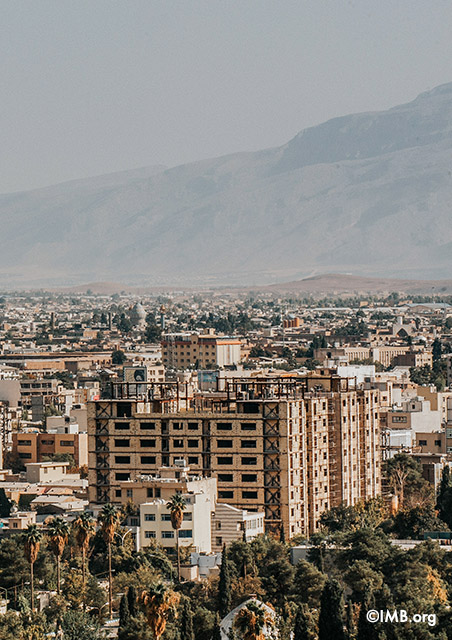
Beyond the news headlines and the conflict between nations, the people of Iran remain, persevering through a long darkness. Almost 70 days of Internet blackout, the rising cost of living and dwindling medical provision have become the norm. But even in such need, the church in Iran is still giving.

It has been 67 days since the Internet blackout began in Iran. Weeks of protests, the onset of war and harshening conditions have shaped the days of those in Iran in recent months, without foreseeable improvement.
Whilst tensions and conflict continue beyond the nation’s borders, burdens borne by those within are getting heavier. The cost of living has sharply increased, intensifying the nagging fear in parents’ minds of how they will feed their children. Medical care is becoming more of a luxury than a given, and those who are ill cannot easily acquire the medication they need.
But as well as physical needs, there are emotional ones. Televised propaganda silences the suffering of the nation and stands in stark contrast to the regular execution of young people. The imprint of the past months will remain on the hearts of Iranians, both within and without, for a long time to come.
Given such grief and darkness, it is remarkable that the church should continue to stand – not only to stand, but to give.
Open hands
“They have kept their eyes on Jesus.”
Abbas
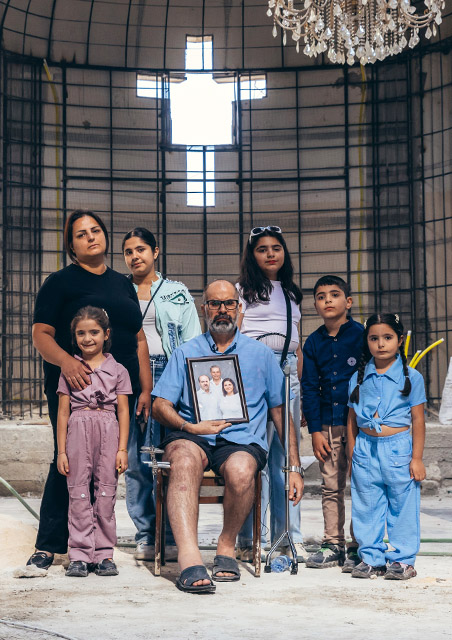
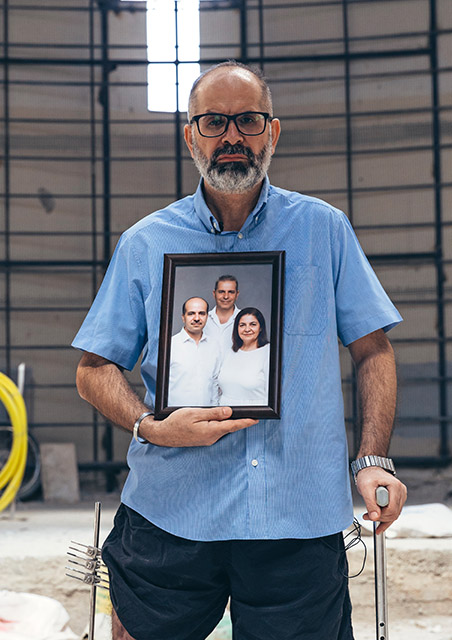
Abbas* is an Iranian Christian and partner of Open Doors expresses such sentiments. “Around 60% of the churches we are in contact with have continued praying and gathering, often in smaller numbers, mainly to encourage one another,” he says. “They have kept their eyes on Jesus and have sought to bring hope and love through small acts of kindness. In doing so, they are not only representing Christ but also showing their communities that Christianity is not confined within church walls.”
Babak* leads a church and can see clearly how economic need is bearing down on people. “House rent, utilities, fuel costs and prices of basic groceries have sharply increased. Damaged infrastructure, factory closures and rising unemployment are already making daily life more difficult for many families,” he explains.
“People continue to give even in these difficult days.”
Babak
Simultaneously, he sees another trend alongside these harsh realities. “There is a powerful testimony emerging from this situation: despite the hardships, tithes and offerings remain strong as people continue to give even in these difficult days!”
Another church leader, Maral*, shares, “During these days, we gather and pray for people’s financial struggles. We know of many people struggling, like a single woman who is supporting her family and has lost her job, a man who has lost his job and his wife is working as a cleaner to make ends meet. Yet, we try to support one another.
“Recently, a group of women in a relatively stable financial situation brought whatever they had in their freezers and cupboards and came together, cooked and distributed the food among those in need.”
“God wants our hearts to grow closer to one another.”
Maral
Out of small contributions, the church was able to prepare support packages for those in need. “It feels as though, in these days of war, God wants our hearts to grow closer to one another and to help each other,” Maral says. “Simply knowing that we care for one another – each according to our ability – reassures us that God’s love is at work among us. Through this love, we are able to serve.”
Trusting in the promises
“This is what the Lord says: ‘Maintain justice and do what is right, for my salvation is close at hand and my righteousness will soon be revealed.'”
Isaiah 56:1
As is the pattern in the Bible, many Christians in Iran are seeing with eyes of faith how God is using their trials for good.
“Given the current financial situation, it’s easy to feel stressed and overwhelmed. But Isaiah 56:1 reminds us of something important,” Armin*, another Iranian Christian shares. “God first calls us to live righteously and faithfully, and He promises that He will not leave us alone. His blessings don’t always come in the form of money. Often, they appear as open doors, timely help or the simple strength to keep moving forward.
“What truly matters is knowing that even in the middle of pressure and uncertainty, God remains faithful and has not forgotten us. These days, I don’t see myself as strong or perfect – but I thank God that I’m still standing.”
“God remains faithful and has not forgotten us.”
Armin
Thank you for your continued support and prayers for the church in Iran. Please continue to stand with them in these difficult days.
*Names changed for security reasons
Please pray
- That believers in Iran would be deeply aware of the Lord’s presence and be ‘filled with an inexpressible and glorious joy’ in Christ in their suffering (1 Peter 1:8)
- For the provision of essential food and medication for those in need, and restored internet access
- That Christians would be protected as they gather, and that their generosity and hope would draw many to follow Jesus.
10 April 2026
“Trying to keep hope alive”: persist in prayer with the church in Iran
Written by Bahar*, an Iranian Christian living outside the country
In recent weeks, the escalation of conflict involving Iran has deeply affected daily life inside the country and the church has not been spared. In these uncertain days, please join believers in fervent prayer, for Iran and the entire region.
Communication has become one of the greatest challenges. For over 40 days, there has been little to no internet access. Contact with believers is limited, closely monitored and carefully managed. Even in conversations, Christians avoid using words such as ‘prayer’, ‘church’ or ‘fellowship’.
“What we are hearing comes from very small, careful conversations,” Mina*, a local Open Doors partner, explains.
Economic pressure continues to rise. Prices increase daily, jobs are unstable and many families no longer have reliable income. In the past, believers supported their house churches and one another, often without outside help. Now, that has become almost impossible.
“There is nothing left,” Mina shares. “Even for basic needs, support from outside is now required.”
Ministry has also been heavily restricted. Travel between cities is dangerous, checkpoints are everywhere and evangelistic trips have largely stopped. At the same time, Christians face increased risk of being accused of collaborating with enemy nations.
“Believers can easily be labelled as spies,” Mina says. “This makes serving more dangerous than before.”
Church leaders are under growing pressure. With gatherings no longer safe, they meet people individually, carrying the emotional weight of others while facing their own fear, stress and trauma.
“They are trying to keep hope alive.”
Mina
“They are trying to keep hope alive,” Mina explains. “But they are also tired.”
At the same time, anxiety and confusion have increased across the country. The need for counselling and emotional support is growing, yet there are very few trained Christian counsellors and no access to outside resources.
“No books, no teaching, no support,” Mina says. “It is very isolating.”
A fragile ceasefire calls for fervent prayer
The United States, Israel and Iran have agreed to a two-week ceasefire after days of sharp escalation. It appears to be a temporary attempt to stop the war from widening further across the Middle East. President Trump has agreed to pause attacks on Iran, while Iran agreed to open the Strait of Hormuz. Negotiations and talks are expected to continue in Islamabad. Meanwhile, Prime Minister Netanyahu announced that a ceasefire between Iran and the US will not affect the Israeli operation in Lebanon.
A ceasefire may bring a moment of relief from violence, but for many Christians inside Iran, it does not mean the pressure has ended – it can actually quietly increase.
“Even in such moments, the church has often grown in depth, resilience and quiet faith.”
Open Doors expert
“History shows that after conflict, authorities often tighten control, leading to more suspicion, arrests and monitoring of believers. And yet, even in such moments, the church has often grown, not in visibility, but in depth, resilience and quiet faith,” shares an Open Doors expert on Iran. “So I pray: Lord, use even this fragile pause not only to restrain violence, but to protect Your people, to strengthen their courage and to open unseen doors for Your Kingdom. May Your presence be their peace where uncertainty remains, and may Your light continue to shine in places where fear still lingers.”
Iran has signalled that the ceasefire does not mean the war is over, warning that it could respond forcefully if fighting resumes. Just before the ceasefire deal and even after the truce, Iran launched rockets targeting countries across the Arabian Peninsula – including Kuwait, the United Arab Emirates and Qatar. While the missiles were intercepted, falling debris caused injuries among civilians.
“Christians pray that Iran will know the truth, and that the truth will set them free.”
Mona
Mona*, a local partner, reflects on the ceasefire: “Iranian Christians are responding to the ceasefire with cautious relief and some disappointment, yet they fear increased persecution. They pray that Iran will know the truth, and that the truth will set them free, while asking the global church for protection, especially for vulnerable children and adults, courage for new believers to grow in their faith despite uncertainty around meeting for Bible study, wisdom for parents on how to protect their children mentally and spiritually, unity for leaders in responding to the crisis, and lasting peace for the people of Iran – that, in that peace, they may see, feel, and know our God.”
Persecution from within
The dangers of war are not the only things facing Iranian Christians. In the midst of conflict, believers continue to be at risk from the Iranian authorities – and shows of religious freedom are only surface-deep. On Wednesday 8 April, an Armenian Orthodox church in Tehran was shown honouring Iran’s late Supreme Leader, Ali Khamenei. The observation of the 40th day after death occurs in Eastern Christian communities like Eastern Orthodox Church, Oriental Orthodox denominations like the Syriac Orthodox Church, as well as in several Eastern Catholic traditions. For many outside Iran, that image may look like a sign of coexistence, mutual respect or even religious freedom. However, for those who know the reality facing many Christians in Iran, the image tells a very different story.
A state-approved ceremony in a historic church is not the same thing as freedom for Christians. In Iran, Christians by birth, those from recognised communities such as Armenians and Assyrians are given a narrow, tightly controlled space under the law, but that limited recognition does not extend equally to converts from Islam.
A church building can be used for symbolism, while at the same time Christians are arrested, interrogated, charged, sentenced and imprisoned for gathering, worshipping in Persian, possessing Christian material in Persian or sharing the gospel with other Iranians. The European Union Agency for Asylum notes that evangelising is treated as a security crime in Iran. Additionally, Article18 has documented at least 139 Christian arrests in 2024, and 254 Christians arrested in 2025, with 96 Christians sentenced to a combined 263 years in prison.
What real freedom looks like
Real religious freedom is not proven by a public ceremony of this nature. It is proven when people can convert without fear, worship without surveillance, pray without arrest and speak of Christ without a prison cell waiting for them.
“The Islamic Republic seems to be attempting, on one hand, to create division among Christians, and on the other, to present an image to the world that its relationship with Christians inside the country is positive,” says Mousa*, an Open Doors partner from the diaspora, who serves Iranian Christians both inside and outside Iran. “We should pray for wisdom, discernment, and peace for Christians in these circumstances. We should also pray that the reality of ongoing persecution and oppression would be revealed clearly to the Western world, so that the truth cannot be hidden.”
“We must continue to pray earnestly.”
Mousa
He adds that the current war is seeing an increase in persecution: “Amid ongoing tensions and conflict, the Islamic Republic has intensified arrests and imposed severe sentences, including the death penalty, often seeking to place blame on its own people. Christians have already faced accusations such as being linked to Zionism or Israel. With the current conflict involving Israel and the United States, believers inside the country are at even greater risk of arrest and persecution. We must continue to pray earnestly for their protection and for the safety of their families.”
Please keep praying for Iranian Christians, as they face persecution from the authorities and their communities, as well as the dangers and anxieties of war. They need and appreciate your ongoing prayers.
*Names changed for security reasons
Please pray
Pray that, in the midst of isolation, hardship and uncertainty, the Lord would draw near to His people in Iran – strengthening weary leaders, providing for those in need and giving courage to believers to stand firm in quiet faith. Ask that this fragile ceasefire would not bring greater pressure, but instead become a moment of protection, wisdom and unseen opportunity, where His peace guards every heart and His church continues to grow in unity, depth and unshakable hope.
weekly emails
We’d love to stay in touch with you by providing regular emails to inform and inspire your crucial support for our persecuted family. These provide news updates, uplifting stories, videos to share with others, and other content for you to engage in.