Middle East | 12 December 2024
24 April 2026
Strengthening what remains in the Middle East – but why needed?
When Brother Andrew founded Open Doors, he was compelled by Revelation 3:2: “Strengthen what remains and is about to die.” Across the world today, that same need persists, including in the Middle East and North Africa, where the church continues to face huge challenges. Here, we look at what this looks like in Syria, Yemen and beyond, and the role you can play in helping strengthen what remains.
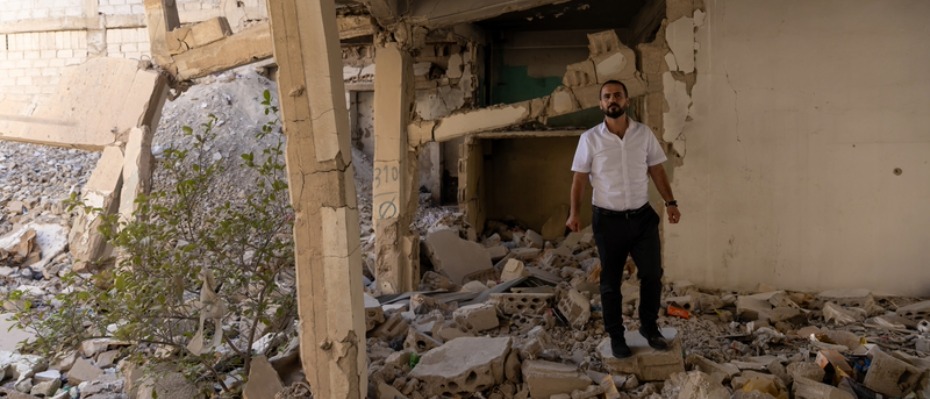
As a boy, Father Laham can remember going to church in Syria and getting lost as he played around. “In joy and in sorrow, safety resides inside the church,” he says.
Sadly, many Christians in Syria no longer feel their church is a haven of safety, particularly following the suicide attack on Mar Elias Church in Damascus in June 2025, killing at least 22 believers.
“They fear that, if they attend the church, they might not survive it.”
Father Laham
“It makes you wonder if the church remains a safe place,” Father Laham continues. “We hear a lot of people saying that they feel frightened now. They fear that, if they attend the church, they might not survive it.”
Safety and security in Syria
It was a very different story up until 15 years ago. “We were used to safety and security in Syria,” Father Laham says. But that was shattered when conflict broke out in 2011, bringing with it increased persecution, and since then, the number of Christians in the country has dropped from 1.8 million to 300,000. Hundreds of thousands of believers have left to find greater safety and opportunities elsewhere.
For many of those who remain, the threat of persecution has become extreme. In the latest World Watch List, Syria jumped 12 places to sixth, making it the largest single-year increase in score on the World Watch List since 2014.
When the Assad regime fell in December 2024, Christians felt a mixture of hope, uncertainty and anxiety. However, under the rule of the Islamist group Hay’at Tahrir al-Sham (HTS), the vulnerability has heightened, as fragmented political power and widespread disorder play into the hands of militants. Meanwhile, pressure from wider society to conform to Islamic ideals and practices has grown.
Incidents like the one in Damascus last year – together with repeated threats and the foiling of further attacks – have added to the fear and unease of Christians. Alongside economic concerns, with people often having to take on multiple jobs to survive, families continue to wonder whether their future lies beyond Syria.
Not forgotten throughout the years
Throughout the years of persecution and conflict, you have been a dependable source of support for our family in Syria, reminding them that they are not forgotten. As challenges persist and even deepen, this continues to be invaluable.
“We have collaborated and established counselling work in Damascus, offering support and assisting individuals who face trauma, particularly those affected by the recent church bombing, the earthquake, or the violence that occurred in the south,” Father Laham shares.
It’s just one of many initiatives you’re supporting, which also includes education and livelihood support, helping give families the tools to not just survive in their homeland but thrive – and that only strengthens the church’s presence in Syria and the wider region.
“My faith is that the church will remain.”
Father Laham
“Christianity remains in this land and has reached the ends of the earth,” Father Laham says. “We are the source; we are the ones who will stay and move forward. We will remain the beacon of light, the salt and the leaven that will ferment; we will shine a light on the darkened hearts of others. My faith is that the church will remain.”
Careful Christianity in Yemen
Yemen is another country where the persecution facing many believers is extreme. The country is third on the World Watch List, and in 2026 there has been unprecedented crackdown on church activities, with the arrest of more than 50 believers.
“Generally speaking, Christians in Yemen are either on the ‘careful’ side, living a double life – a Muslim in the eyes of society and a Christian at home – and carefully reaching out only occasionally to trusted people and seekers. These Christians mostly live out their faith online,” an Open Doors expert on Yemen explains. “On the other hand are Christians who are living out their faith transparently, trying to meet with people face-to-face and carefully share the gospel when opportunities arise.
“Both groups choose to remain inside the country, though, seeking ways to reach out to their community, whether online or offline.”
Who to trust?
A common problem for many believers is isolation. There are no official churches in Yemen, and whilst some believers gather with each other, often at huge risk, many are simply unable to, particularly women.
“There are only a few trusted friends that I get together with, and that’s it. I lack community.”
Yemeni Christian student
“I go to school, attend my classes then return home,” a Yemeni Christian student shares. “I directly go and browse the internet, rummaging through online Christian pages, or talking through secure chat boxes with other Christians outside Yemen, to be encouraged. There are only a few trusted friends that I get together with, and that’s it. I lack community.”
The student touches upon another key issue – trust. Believers can be reported to the authorities even by their own neighbours, and there is the ever-present threat of infiltration. “Trying to balance between accepting new seekers and staying alert and careful of what might happen to the group is a huge responsibility and risk, especially for leaders,” the expert says.
Helping people offline and online
As in Syria, Open Doors local partners are actively involved in supporting the Yemeni church, working with believers both online and offline. Much of it revolves around discipleship and friendship, given the isolation of believers. Emergency aid is also on hand for families affected by an imprisonment.
All of this is happening against a backdrop of war, a deteriorating economy and an acutely severe humanitarian crisis. But despite these challenges, including this latest crackdown which has shaken many believers, the Yemeni church remains emboldened in their faith – helped by you.
“We see more incidents of people coming together – meeting openly, growing bolder, becoming more motivated to serve, and increasingly aware of corruption in their country. Many are fed up and are searching for something more,” the expert shares.
“Yemenis want to stay and remain, even though it is a tough life to live.”
Yemeni believer
It’s echoed by a believer who was forced to leave Yemen. “Actually, our situation was physically challenging in Yemen but, spiritually, we are surrounded by people who are bold, people willing to take a risk for their faith. And it was somehow okay or even a better situation. People were on fire. This actually is why Yemenis want to stay and remain, even though it is a tough life to live.”
Courage to remain
These updates from Syria and Yemen reinforce the paradox of persecution – extraordinary dangers alongside extraordinary courage. It’s reflected elsewhere in the Middle East and North Africa – in places like Iran, Iraq, Egypt Morocco and Algeria – as believers remain faithful to Jesus, even as they encounter hostility from the authorities, local communities and their own families. Crucial to their resilience is the support of their global family. As the expert from Yemen puts it, “We need to be one church together.”
Please pray
“Pray for us to live in peace again, in security and fraternity,” asks Father Lahan. “We are calling on the church to pray that Syria remains a cradle for Christianity and civilization.”
“Pray that what is happening now will open the eyes of my dearly beloved Yemenis,” asks a Yemeni believer. “May they realise that there are Christians in Yemen who believe in Jesus. May our struggles push them to believe in Him.”
Please give
- Every £19 could help prepare a believer with persecution survival training, so they can persevere through any opposition.
- Every £30 could help give vital trauma care to a Christian who has faced extreme persecution, so they can receive hope and healing.
- Every £40 could give a Christian and their family vital support in time of crisis or extreme persecution.