China | 22 September 2026
29 July 2026
Ling’s church in China is being spied on
In rural China, persecution for Christian converts comes from two sides: local community and government officials. Please stand with our brothers and sisters in the underground church.
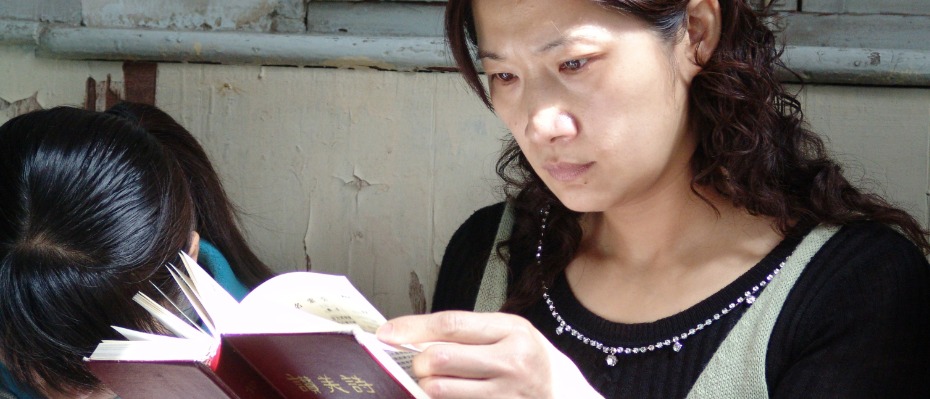
Ling’s* church has to meet in secret. Even sending messages arranging to meet is dangerous. “My WeChat’s being watched,” she says. “The village authorities don’t like us to connect with believers outside.”
In China, religious activity is strictly curtailed. You’re permitted to go to a registered church in the Three-Self Patriotic Movement or the Catholic Patriotic Association, but these denominations are closely monitored and controlled. In rural areas, particularly, Christianity is treated with deep suspicion and gathering with other believers is fraught with danger. “Rural minority believers like Ling face long-term surveillance by the authorities,” confirms Fuxi*, an Open Doors partner who is supporting Ling and offered discipleship training. “Ling and a few believers attended this training quietly, without informing the rest of the village.”
What happens if she demonstrates her faith too publicly? “Villagers who convert to Christianity often face the loss of government welfare subsidies – a heavy burden for those already struggling with poverty,” shares Fuxi. “At the same time, home gatherings are declared illegal by the authorities, who deploy personnel to monitor these meeting places and restrict Christian activities. In recent years, such gatherings have been raided multiple times.”
It’s why Ling had to refuse a home visit from another Open Doors partner, Matian*. But she’s used to making covert arrangements to meet with believers. “Believers are forced to constantly change the time and location of their meetings to avoid surveillance,” explains Fuxi.
Raids on bigger city churches have made global headlines – but this daily oppression on smaller communities of believers often happens without any outcry or any outsiders noticing. And the situation is only getting worse. The authorities are clamping down harder than ever on churches like Ling’s. And it’s forcing more and more churches underground.
A transformative encounter with Christ
But Ling’s problems didn’t start with the authorities. Like many converts from China’s ethnic minorities, she faces persecution on multiple fronts. Ling and her husband, Song*, grew up in a remote mountain village in south west China. They moved to a nearby town in search of work and, when a friend invited them to visit a local church, they encountered Jesus for the first time.
“The message of hope spoke directly to our brokenness.”
Ling
“That day in church, something stirred in my heart,” Ling recalls. “The message of hope, love and forgiveness spoke directly to our brokenness.”
Over time, their faith grew. Eventually, Ling and Song had a daring thought: what if they moved back home to share the gospel? They knew it wouldn’t be an easy path. Their families were, like almost all the villagers, followers of ancestor worship, shamanic practices and other centuries-old local traditions. These were deeply ingrained in their community’s identity. Contradicting them with the good news of Jesus Christ would bring fierce opposition.
“Let’s take the adventure,” said Song. “Only the gospel can set people free.”
Bold faith
Reality proved even harsher than they expected. As soon as the pair mentioned ‘God’, their relatives erupted in anger. When Ling later refused to participate in ancestral rites, things came to a head.
“My husband’s younger brother exploded in rage, unable to accept that I – ‘a weak woman’ – would dare to defy the authority of the family. He pointed at me, hurled insults and even threatened to hit me. I was afraid and weeping, yet in my heart I prayed to God for help.”
Song was away at a Bible class. When his brother called him to report Ling’s ‘defiance’, Song was clear: “We believe in Jesus now. We no longer take part in ancestral worship.”
This boldness cost Ling and Song their families. They were rejected and ostracised by their relatives and the village elders. In a village where survival hinges on kinship, their faith in Jesus set them apart, making their lives increasingly difficult and vulnerable. They continued to worship in isolation, driven away from those they loved.
A tragedy becomes a miracle
But God had plans for Ling’s family. There was a terrible moment when their six-year-old son drank pesticide that he found on the kitchen table. He was rushed to the village clinic, but the doctors said there was no hope: he would die. Song’s father was renowned in the village for healing through sorcery and shamanic rituals, but he was powerless to help.
Ling and Song, of course, prayed fervently. For more than ten days, their son hovered between life and death – until the prayed-for miracle came. He recovered fully, astonishing the doctors and his family.
Amazed by God’s power, Song’s father made a decisive change. He removed all idols and tools of witchcraft from his house and gave his life to Jesus. Dozens of relatives chose to do the same thing. Ling and Song went from being outcasts to having a new church of believers.
“Our whole family came to Christ!”
Ling
“Everything changed dramatically,” remembers Ling with joy. “Our son’s healing revealed the mighty power of God. Our whole family came to Christ!”
A growing ministry attracts attention
While the family joined them in worship, the wider community was still very opposed to Christianity. Gathering for church therefore had to be done in secret, with believers often walking for hours to meet with other Christians.
Over the years, the number of believers in the fellowship steadily grew and grew. Their fervour for the Lord didn’t abate. Song and Ling joined a local missionary team dedicated to sharing the gospel with ethnic minorities in the south west region, and their mountain community became one hub of this ministry.
And that’s when they began to attract the attention and scrutiny of the local Chinese authorities. The community pressure was nothing compared to the possible dangers posed by government officials in the region.
Arrests, detentions – and hope
“Recently, more than ten church workers in the region were detained and questioned about Christian activities from past years,” shares Matian. Last summer, house gatherings were severely disrupted. On one occasion, police raided a fellowship at a leader’s home. The leader was taken away, interrogated, warned and detained for eight days for ‘illegally organising religious activities’.
In another case, a couple who hosted home gatherings and led online devotions and Bible studies was summoned for questioning. During the interrogation, police presented printed records of their online group chats. Accused of ‘illegally organising online preaching’ and ‘illegally organising religious activities’, the husband was detained for almost two weeks.
Ling and Song know how dangerous their ministry is – and that’s why persecution survival and discipleship training, and the ongoing fellowship of local Open Doors partners like Matian and Fuxi, are so crucial in equipping them to continue.
Over the past months, Open Doors partners have risked their lives to faithfully visit Ling’s family and the village church workers who were recently detained. With your prayers and support, they can travel to them and offer practical aid, comfort, prayers and renewed hope.
Please keep praying with our brothers and sisters of the underground church. You can help believers who have to worship in secrecy and danger to know they are not forgotten and never alone.
*Name changed for security reasons
Please pray
- For Ling, Song and other vulnerable believers to have their faith strengthened and their needs provided for
- That many more in the region will hear the gospel and turn to Christ
- For God to protect and strengthen Open Doors partners including Fuxi and Matian.
Please give
- Every £21 could help provide practical, medical, legal and pastoral support to an underground believer.
- Every £32 could help train underground believers to persist through persecution and, in turn, support other persecuted churches.
- Every £50 could help build the next generation of the underground church through a youth leadership programme.